
Bedrooms
Bedrooms usually benefit most from privacy and sound control. Solid core interior doors are often the preferred choice, especially when paired with consistent styles like those found in panel doors.
Interior doors do more than close off a room. They shape privacy, sound control, room-to-room flow, and how light moves through the home. A simple way to choose the right interior door is to start with style, then system, then material, then core based on the level of privacy, durability, and sound control you need.

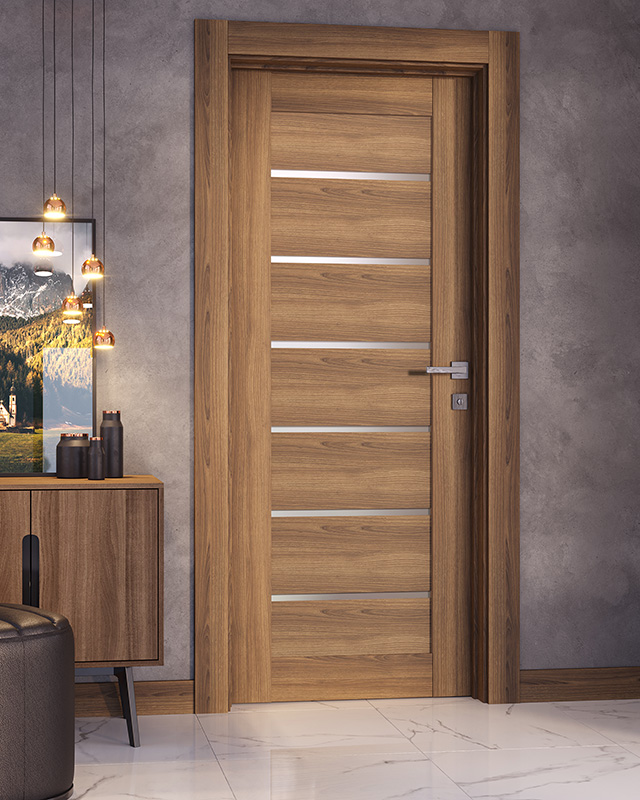
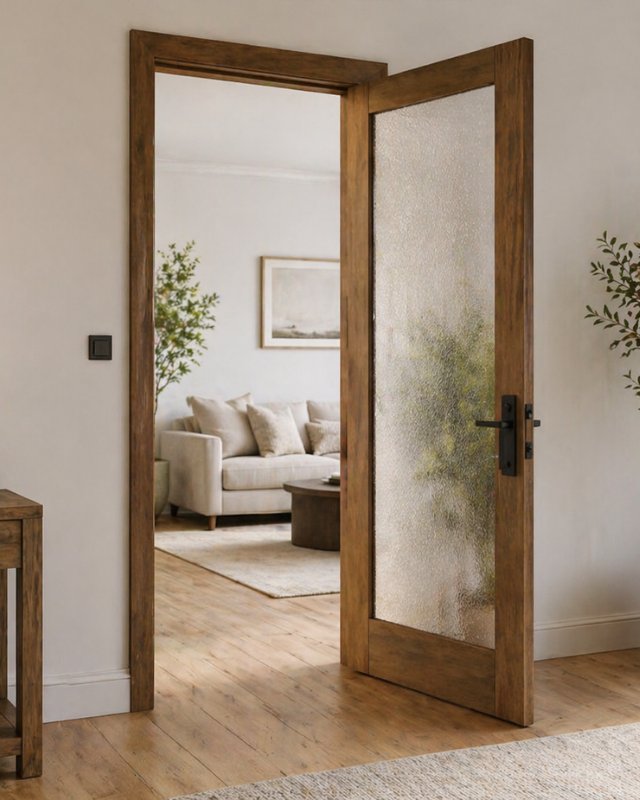
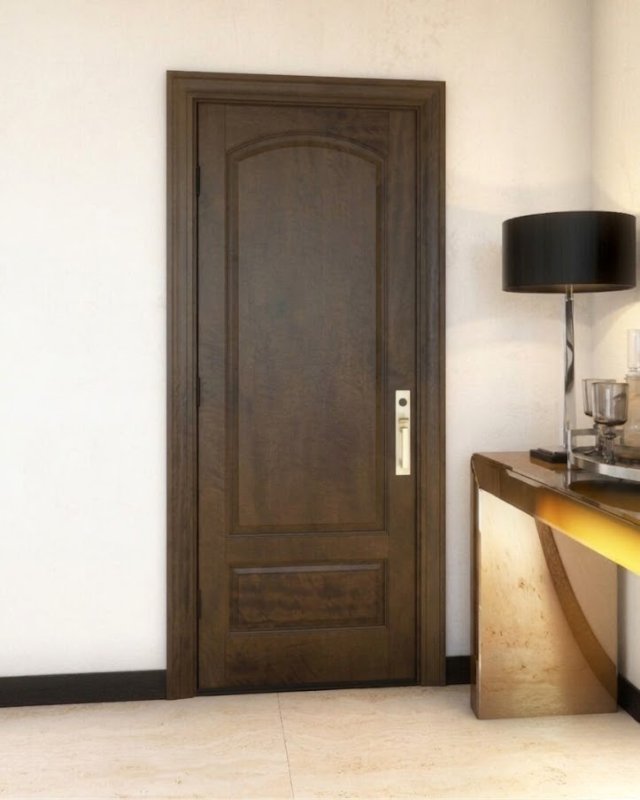
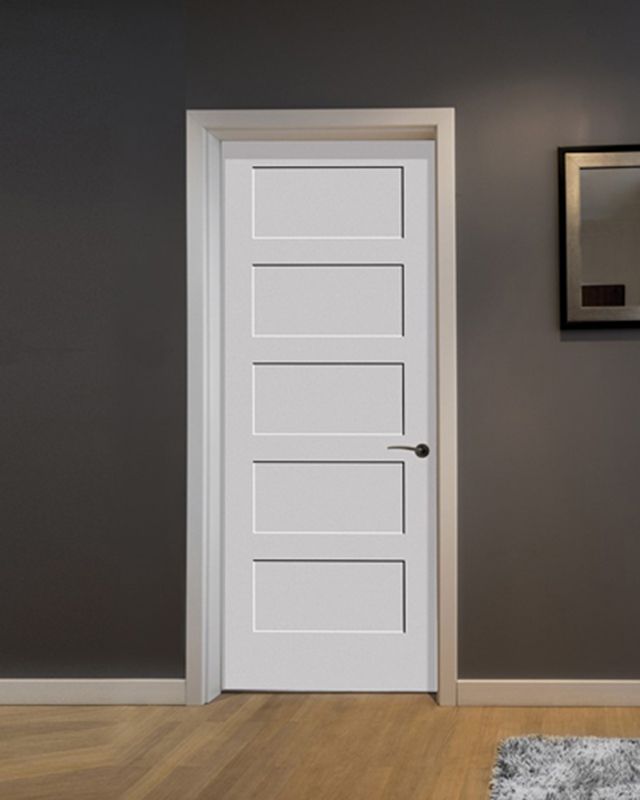

A single interior door is the most common setup and works well for standard openings where swing space is not a concern.
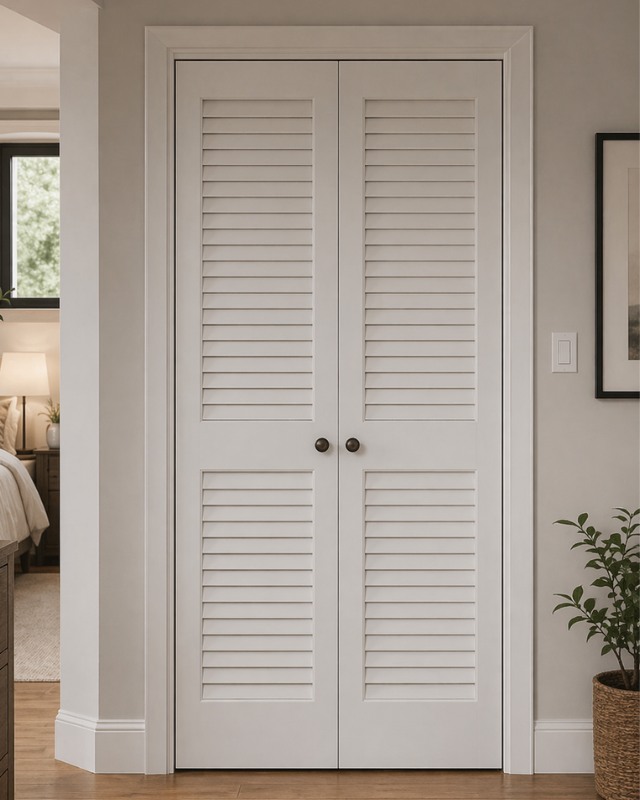
Double interior doors create a wider opening and a stronger visual transition between spaces. They are often used in larger rooms where flexibility and openness matter.
Bifold doors fold inward, making them useful in closets, laundry areas, and other tight spaces. This setup is common in bifold doors.
Barn doors combine space-saving function with a more visible design feature. They are often used in offices or transitional spaces and are widely available as barn doors.
Bypass doors slide past each other and are commonly used for closets or wide openings. They help maintain access without requiring clearance, which is why many homeowners choose bypass doors.
Pocket doors slide into the wall, making them a practical choice when swing space is limited. This approach is common in layouts that use pocket door styles.
Hidden sliding systems offer the benefits of sliding doors with less visible hardware. This approach is commonly associated with magic sliding doors.
Frameless interior doors sit flush with the wall for a clean, minimal appearance. This approach is often used in modern interiors and is reflected in frameless invisible frame doors.
Explore our full range of traditional interior doors, designed to add timeless charm and elegance. From classic panel and French styles to solid wood and louvered options, find the perfect match for your decor.
Bring timeless elegance to your home with classic panel doors. Available in raised or flat panel designs, these doors are perfect for traditional interiors.
Enhance your home with the elegance of arched interior doors. Their unique shape adds architectural interest to any traditional space.
Foundations




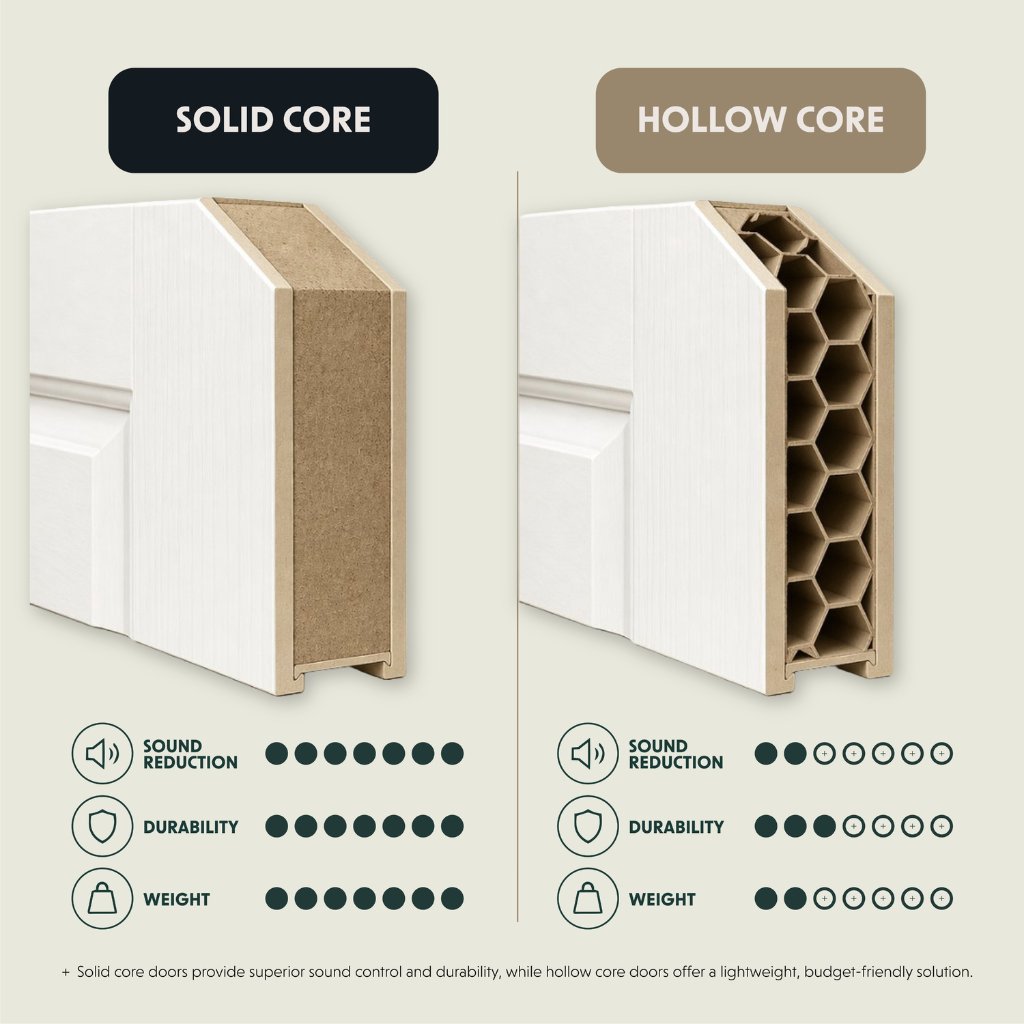
Core type directly affects sound control, durability, and weight. Solid core interior doors generally provide better sound separation and dent resistance, making them a strong choice for bedrooms, bathrooms, and offices. Hollow core doors are lighter and often used where lower weight and value matter more than sound control.
Glass interior doors allow more light to move between spaces but reduce privacy and sound separation. Frosted or textured glass can help balance brightness with privacy.
Openings
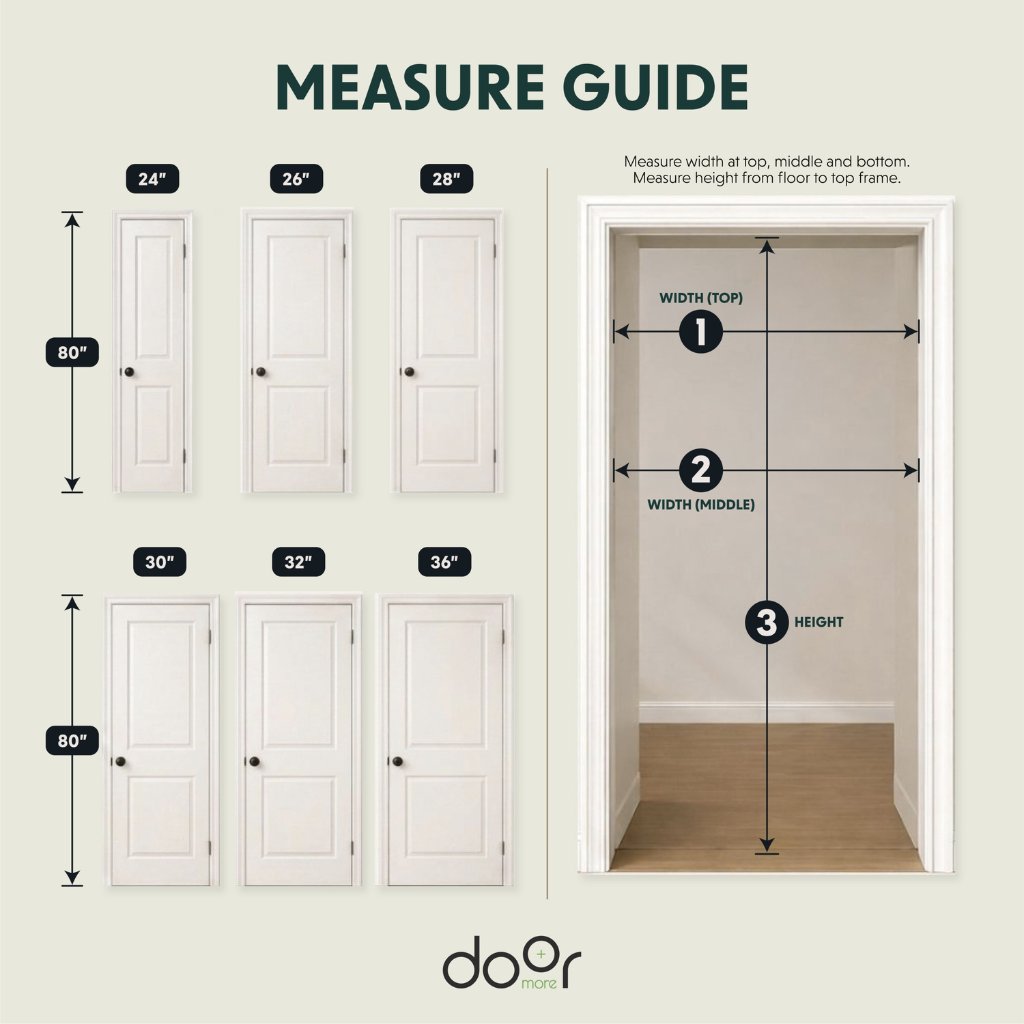
Common interior door sizes (quick reference) — match or plan for what you measure.
Typical widths
Heights
80″ is the most common height. 84″ and 96″ heights are also available.
By space
Match the door to how the room is used: privacy, sound, and traffic patterns.
Start with style, then choose a system that fits your layout. From there, select material and core based on the level of privacy, sound control, and durability you need. If you are unsure, the room-based guidance above can help confirm your direction.
Start with style, then system, material, and core to match both design and performance needs.
Yes. They provide better sound control and durability than hollow core doors.
They allow more light but less privacy. Frosted glass can improve privacy while keeping brightness.
Widths typically range from 24 to 36 inches, with 80 inches as the standard height.
When your opening is not standard or your design requires a specific configuration, often handled throughcustom doors.
Bifold, bypass, and sliding systems are commonly used where space is limited, especially withininterior door systems.
About Us
US Door & More Inc. unveils a treasure trove of stylish residential doors without the hefty price tag. In a world where every homeowner cherishes the allure of exquisite interiors adorned with premium fixtures and decorative accents, we serve as your gateway to achieving a beautiful home that resonates with quality and style. Our collection of custom doors, available in an array of sizes, styles, and artistic imprints, offers a delightful journey from choosing a door to seeing it adorn your space. Whether your heart leans towards wood doors or double doors of superior quality, US Door & More Inc. is the destination where your search meets its match. With us, you're not just buying a door, but a promise of quality, affordability, and a home that feels just right every time you step in.
Key Features
Company Info