
What is the Standard Door Size for Residential Homes?
When buying a door, you should consider many factors. What style of door you want? Do you want just a slab or a pre-hung door? Do you want an out swing or an in swing? Once you have that information you will need to start measuring. Measuring a door and its frame can be difficult if you don’t know what you are doing. Here are a few good measurement practices and basic facts surrounding standard door sizes.
Standard Size for Exterior Doors
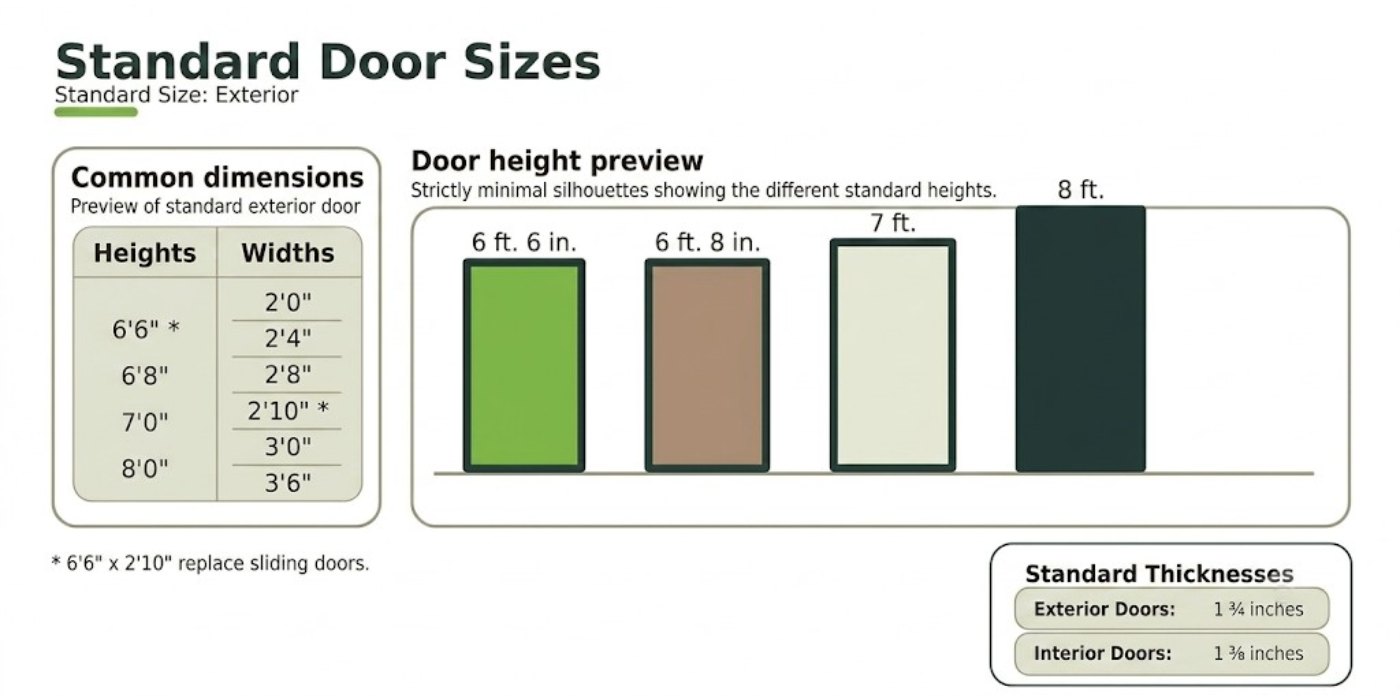
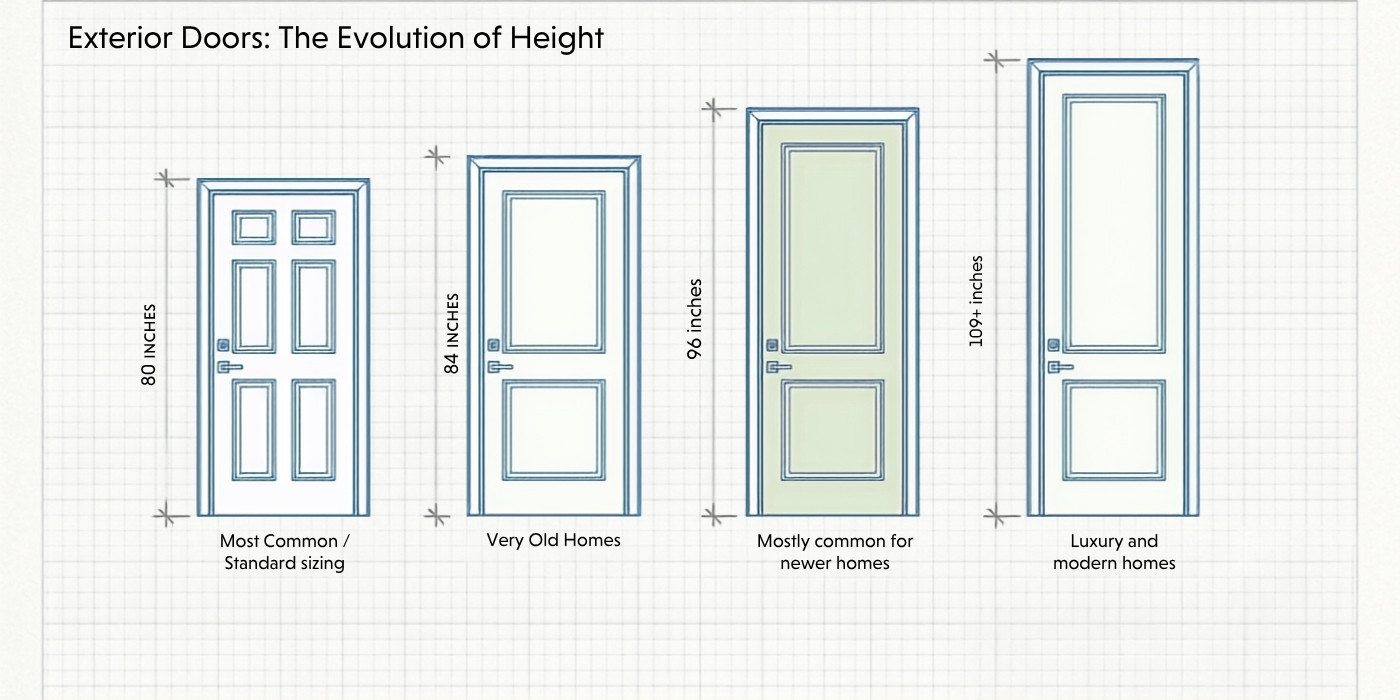
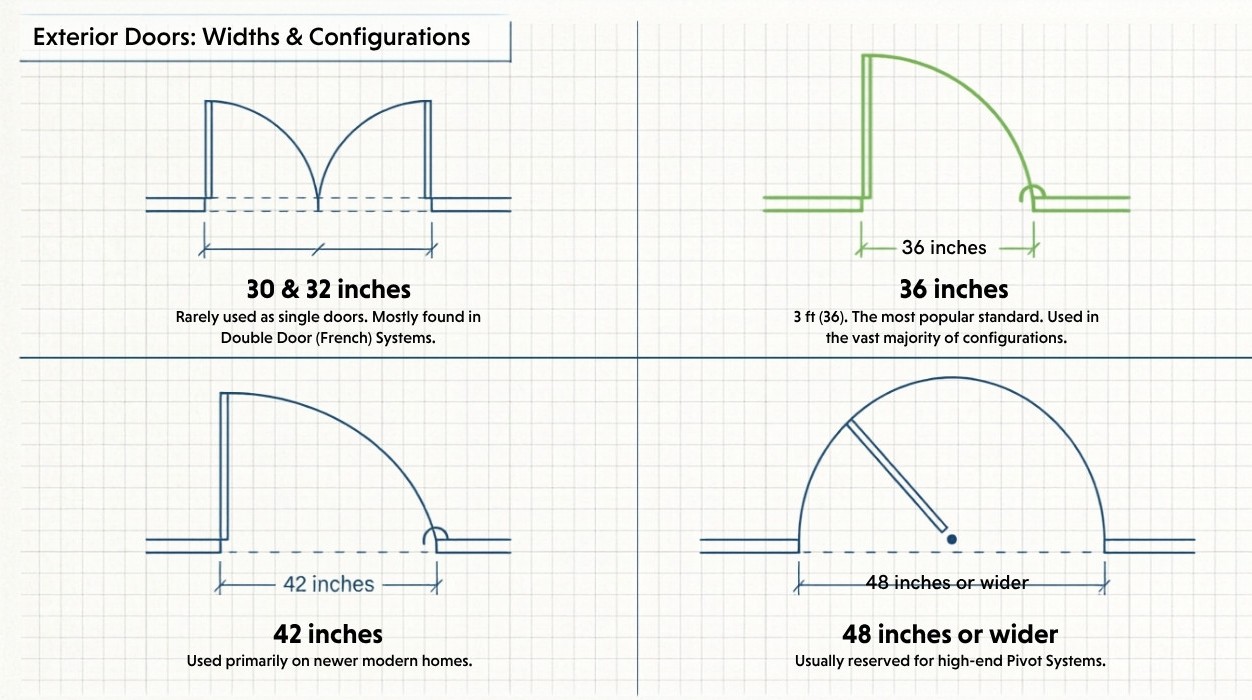
The standard size for an exterior door is 80 inches by 36 inches which is 6 ft, 8 inches by 3 ft. 96 inches or 8 ft. is now very common for newer homes and stock exterior doors are also commonly available in 30 and 32-inch widths. Some door manufacturers sell doors in 7ft & 8ft heights and door widths from 24 inches to 42 inches.
Standard Door Thickness
1 ¾ inch
The absolute standard baseline thickness for secure residential exterior paths.
Material Structural Rules
Fixed 6'8" & 8'0" Heights
The height for fiberglass or steel doors are fixed at 6 ft. 8 inches tall and 8 ft. tall.
Exterior Heights Quick List
Exterior Widths Quick List
Standard Size for French Doors
The standard size for an exterior door is 80 inches by 36 inches which is 6 ft, 8 inches by 3 ft. 96 inches or 8 ft. is now very common for newer homes and stock exterior doors are also commonly available in 30 and 32-inch widths. Some door manufacturers sell doors in 7ft & 8ft heights and door widths from 24 inches to 42 inches.
Standard Thickness
1 ¾ inch
The baseline industry thickness standard for premium residential and heavy-duty exterior openings.
Fiberglass & Steel Constraints
Fixed 6'8" & 8'0"
The height for fiberglass or steel doors are fixed at 6 ft. 8 inches tall and 8 ft. tall.
Standard Size for Sliding Glass Doors
These type of patio doors let a lot of natural light into the house. They are the most common and least expensive type of patio door. This type of patio doors slides in a parallel motion and it makes it easy for homeowners to come in and out of the house. The best place to install sliding doors would be at a patio area or a deck. Keep in mind, these doors come in various sizes depending of the manufacturer.
Standard Size
6'8" H × 6' W
The baseline standard dimensional spec for most typical sliding glass patio installations.
Other Popular Sizes
5’0” X 8’0”
6’0” X 8’0”
8’0” X 8’0”
Common alternative architectural configurations widely requested for grander openings.
Standard Interior Door Size Matrix
The height for all passage doors must be a minimum of 80 inches. While standard width sizes for interior doors are typically 24”, 28”, 30”, 32”, and 36”, these heights can be applied fluidly to any room across your house depending on your space layout.
Accessibility Clearance
36" Minimum Width
The minimum recommended door width to allow persons with disabilities to pass through cleanly.
Thickness Guidelines
1 ⅜ inch
Standard standard thickness specification for typical interior applications.
1 ¾ inch
Recommended if your door exceeds 36” wide or is over 90” in height.
Height, Width & Common Application Chart
| Door Height | 1'-3" / 1'-6" / 2'-0" Widths | 2'-4" / 2'-6" Widths | 2'-8" / 3'-0" Widths |
|---|---|---|---|
| 6/8 (80" Min) | Used for bi-fold doors | Used for bathroom doors | Used for bedrooms |
| 7/0 (84") | Used for bi-fold doors | Used for bathroom doors | Used for bedrooms |
| 8/0 (96") | Used for bi-fold doors | Used for bathroom doors | Used for bedrooms |
Standard Size for Closet and Utility Doors
Utility and closet doors usually have tighter passages than standard doors. Depending on the era of your home's construction, these secondary entryways can vary significantly in both clearance width and overall ceiling height standards.
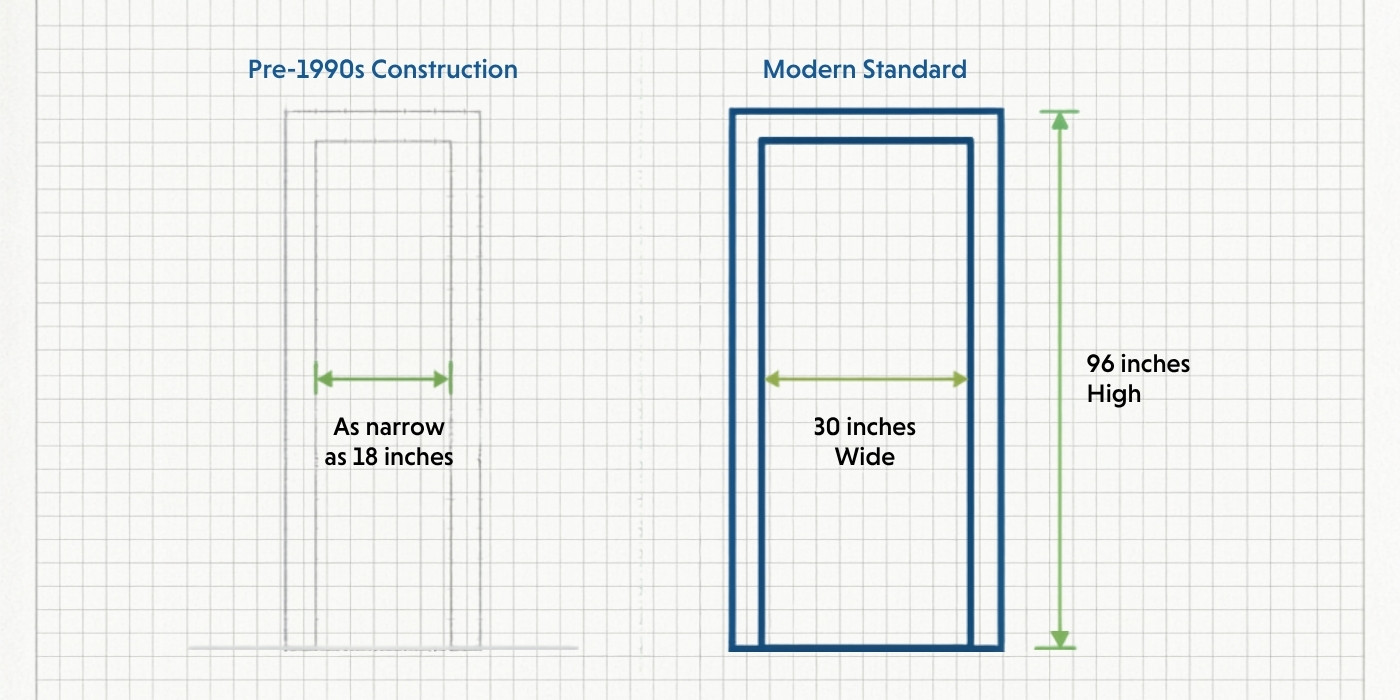
Pre-1990s Construction
As Narrow as 18"
In houses built before the 1990s, closet and utility openings could regularly be found with highly condensed narrow passages.
Newer Homes Standard
30" W × 96" H
Newer homes usually feature a broader width of 30 inches paired with an elevated standard height of 96 inches.
How to Measure Your Door Properly
If you are looking to replace a door you currently have, measure the existing door from top to bottom. Continue by measuring the door from left to right. You also want to measure the thickness of the door. Most doors have a thickness of 1 ¾ inch. Your door shouldn't be too far from that measurement. It is also important to measure the width of the door jamb and the height and width of the frame. Be sure not to include the trim in your measurement.
The Rough-In Calculation Rule
Finally, you should add 2 inches to the width measurement of the door and 2 inches to the height for the doorway opening. This is called a rough-in measurement. A rough-in measurement applies whether or not you are using a pre-hung door.
Related Gallery
When buying a door, you should consider many factors. What style of door you want? Do you want just a slab or a pre-hung door? Do you want an out swing or an in swing? Once you have that information you will need to start measuring. Measuring a door and its frame can be difficult if you don’t know what you are doing. Here are a few good measurement practices and basic facts surrounding standard door sizes.
Standard Size for Exterior Doors
The standard size for an exterior door is 80 inches by 36 inches which is 6 ft, 8 inches by 3 ft. 96 inches or 8 ft. is now very common for newer homes and stock exterior doors are also commonly available in 30 and 32-inch widths. Some door manufacturers sell doors in 7ft & 8ft heights and door widths from 24 inches to 42 inches.
Standard Door Thickness
1 ¾ inch
The absolute standard baseline thickness for secure residential exterior paths.
Material Structural Rules
Fixed 6'8" & 8'0" Heights
The height for fiberglass or steel doors are fixed at 6 ft. 8 inches tall and 8 ft. tall.
Exterior Heights Quick List
Exterior Widths Quick List
Standard Size for French Doors
The standard size for an exterior door is 80 inches by 36 inches which is 6 ft, 8 inches by 3 ft. 96 inches or 8 ft. is now very common for newer homes and stock exterior doors are also commonly available in 30 and 32-inch widths. Some door manufacturers sell doors in 7ft & 8ft heights and door widths from 24 inches to 42 inches.
Standard Thickness
1 ¾ inch
The baseline industry thickness standard for premium residential and heavy-duty exterior openings.
Fiberglass & Steel Constraints
Fixed 6'8" & 8'0"
The height for fiberglass or steel doors are fixed at 6 ft. 8 inches tall and 8 ft. tall.
Standard Size for Sliding Glass Doors
These type of patio doors let a lot of natural light into the house. They are the most common and least expensive type of patio door. This type of patio doors slides in a parallel motion and it makes it easy for homeowners to come in and out of the house. The best place to install sliding doors would be at a patio area or a deck. Keep in mind, these doors come in various sizes depending of the manufacturer.
Standard Size
6'8" H × 6' W
The baseline standard dimensional spec for most typical sliding glass patio installations.
Other Popular Sizes
5’0” X 8’0”
6’0” X 8’0”
8’0” X 8’0”
Common alternative architectural configurations widely requested for grander openings.
Standard Interior Door Size Matrix
The height for all passage doors must be a minimum of 80 inches. While standard width sizes for interior doors are typically 24”, 28”, 30”, 32”, and 36”, these heights can be applied fluidly to any room across your house depending on your space layout.
Accessibility Clearance
36" Minimum Width
The minimum recommended door width to allow persons with disabilities to pass through cleanly.
Thickness Guidelines
1 ⅜ inch
Standard standard thickness specification for typical interior applications.
1 ¾ inch
Recommended if your door exceeds 36” wide or is over 90” in height.
Height, Width & Common Application Chart
| Door Height | 1'-3" / 1'-6" / 2'-0" Widths | 2'-4" / 2'-6" Widths | 2'-8" / 3'-0" Widths |
|---|---|---|---|
| 6/8 (80" Min) | Used for bi-fold doors | Used for bathroom doors | Used for bedrooms |
| 7/0 (84") | Used for bi-fold doors | Used for bathroom doors | Used for bedrooms |
| 8/0 (96") | Used for bi-fold doors | Used for bathroom doors | Used for bedrooms |
Standard Size for Closet and Utility Doors
Utility and closet doors usually have tighter passages than standard doors. Depending on the era of your home's construction, these secondary entryways can vary significantly in both clearance width and overall ceiling height standards.
Pre-1990s Construction
As Narrow as 18"
In houses built before the 1990s, closet and utility openings could regularly be found with highly condensed narrow passages.
Newer Homes Standard
30" W × 96" H
Newer homes usually feature a broader width of 30 inches paired with an elevated standard height of 96 inches.
How to Measure Your Door Properly
If you are looking to replace a door you currently have, measure the existing door from top to bottom. Continue by measuring the door from left to right. You also want to measure the thickness of the door. Most doors have a thickness of 1 ¾ inch. Your door shouldn't be too far from that measurement. It is also important to measure the width of the door jamb and the height and width of the frame. Be sure not to include the trim in your measurement.
The Rough-In Calculation Rule
Finally, you should add 2 inches to the width measurement of the door and 2 inches to the height for the doorway opening. This is called a rough-in measurement. A rough-in measurement applies whether or not you are using a pre-hung door.
Related Gallery